Punxsutawney Phil’s Street Report

The Shadow Trend Report in Spirits—Street Sheet #14
By John Henry and Punxsutawney Phil

We survived another January. Including those post holiday credit card bills. Enough of the resolution nonsense. Let’s face it, if you don’t do something daily, well then you just ain’t doing it. So as sure as it is chilliest before dawn and the sun rises in the east, I figured it was time to reflect a little from the shivering street.

Let’s assess a few trends past, present and future. Some may induce déjà vu and even cause a shadow from the past to project on the future.

For that reason, I dub this the Punxsutawney Phil Shadow Trend Report. Here’s a fresh Groundhog’s Day morning baker’s dozen (plus one for the shadow):

Line extensions are petering out.
We may look back and realize it was Cookie Dough flavored vodka that broke the buyer’s back. Or not. Wondering- Is a jelly donut flavored vodka far behind? Savvy buyers will start cutting back on extended items. They’ll begin actively curating their spirits collections. Especially white goods. To curate is survive. Even thrive.

Mentoring is the new process to market.
Smart folks like Julie Reiner have been doing it for years. You mentor for the long haul. The old apprentice system actually works. Ambassadors, especially those who unfortunately float from brand to brand, take note.

Quality brown spirits will return to their respected mainstream helm.
It is already a mixed drink with those wood goodies in there. Barrel aged from day one if the color is authentic. Coming up behind them, the flavor-rich white goods, like quality agricole rhums and spicy agave spirits, will thrive as the next wave of drinkers’ palates mature.

There will be a full shakeout in craft spirits as there was in the first wave of craft breweries a few decades back.
Putting out a marginal product in a cool little boutique bottle won’t cut it anymore. Better locally produced spirits at sweet spot price points (like $19.99 retail per liter) will re-emerge and dominate local business. Local distillery pubs offering farm to table food to accompany farm to table spirits will become the trend. Tito, you were a visionary. And I will personally ride my bike down to Austin and kick your ass if you even think about launching a flavor. Plus, I will charge you for the service.

A Fourth Tier will emerge for craft spirits.
This will make it easier for them to bypass the big guys and the stranglehold of local distributors’ ignorance and arrogance. Craft spirits will cast its own strong, organically built natural shadow.

Box stores will sell limited SKUS and dominate their sales.
A savvy off-premise retailer will learn, and again master, the craft of the hand sell on items those big
20, 000+ sq ft guys and supermarkets simply don’t carry. And probably make margin on same for doing so.

On Premise: Building bonds with customers is the new paradigm for Read the full article here »

BOCUSE BATTLE IS ON

Culinary all-stars are at it this Sunday and you can be there.  VIP style.

By Francine Cohen

The battle for USA’s world domination in the 2013 Bocuse d’Or competition begins at home this Sunday as four highly qualified contestants pit their skills against one another in the Bocuse d’Or USA Foundation’s USA Finals Competition.  The winner will be attending the big dance in Lyon, France next January and representing the USA.

“This weekend is about selecting the very best American chef to represent the USA on the international stage. It should be a matter of great pride to our entire American culinary community,” said Chef Daniel Boulud.

The Bocuse d’Or USA Foundation, a non-profit organization committed to inspiring culinary excellence, led by Chefs Daniel Boulud, Thomas Keller,Jerome Bocuse,opens the finals to the public on a first-come, first-serve basis. 

But, as always, INSIDE F&B has a special inside track for you. Courtesy of Nespresso, a 2012 Member Sponsor of the Bocuse d’Or USA, two tickets in the comfortable VIP section are available for the first person to correctly tell us the number of grand crus offered by Nespresso to their fine dining and hotel customers.(For a clue take a look at www.nespresso.com/pro).

As business tool for the culinary world Nespresso is thrilled to get behind this competition that demands the same exacting standards as their regular customers.  Jim Frisby of Nespresso Business Solutions notes, “Nespresso offers Read the full article here »

FINDING YOUR WAY

The Path from Farm to Table might not be so clear
By Leah Weinberg, Associate, Golenbock Eiseman Assor Bell & Peskoe LLP

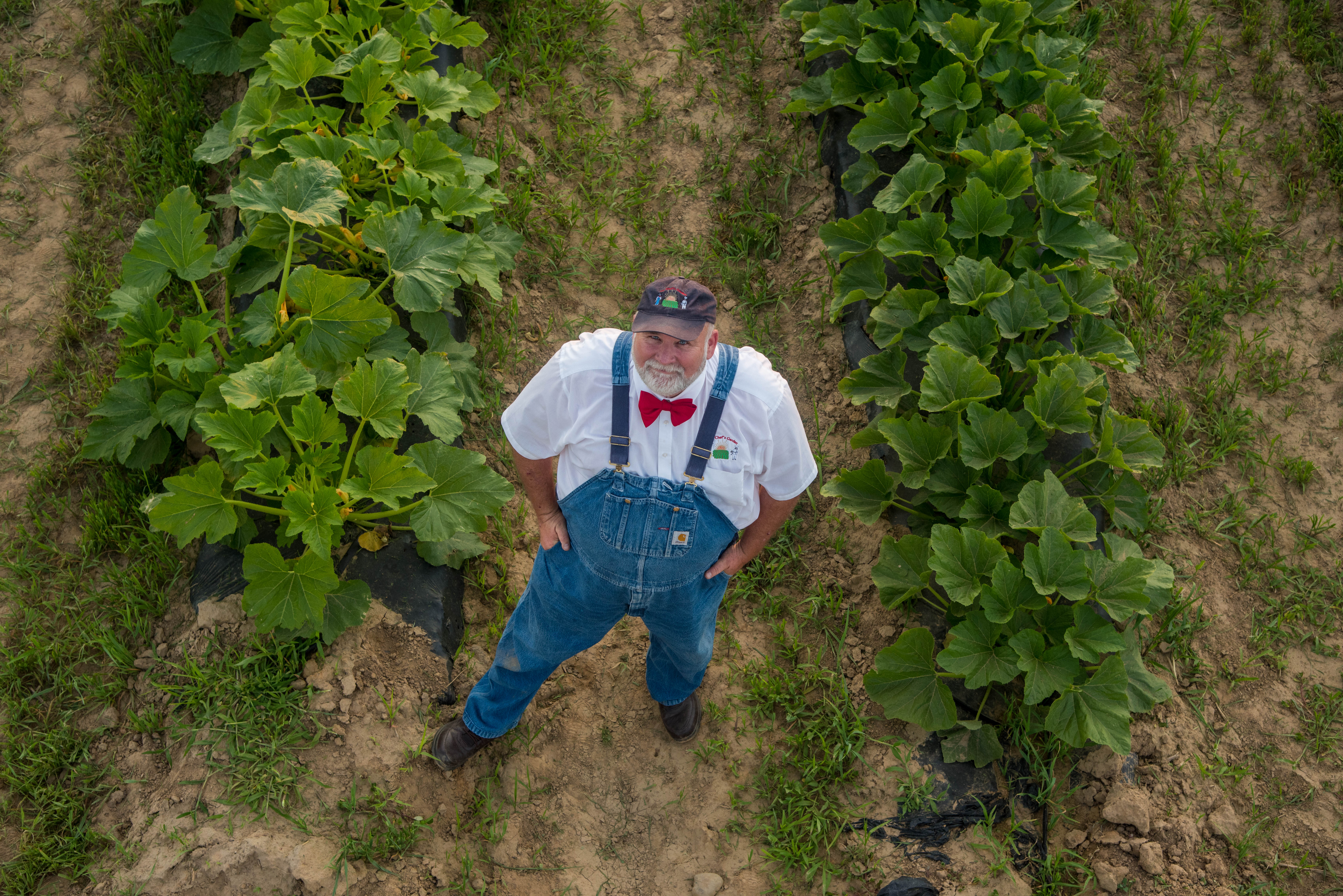
Anyone paying attention to what’s going on around them has noticed that there’s no stopping one of the more popular movements in the restaurant world — farm-to-table. Chefs are the driving force behind this experience as they feature local ingredients as staples on their menu, thus supporting local businesses and conducting business in a more environmentally friendly way. Their diners are right behind them, applauding the effort.

Desirable as it may be to win that applause from guests who have soaked up hours of food and beverage programming like that dished out on Bravo’s “Top Chef”, Travel Channel and Food Network offerings featuring celebrity chefs (like Rachael Ray, Anthony Bourdain, Bobby Flay and all the Iron Chefs), being environmentally friendly and starting a farm-to-table operation may or may not be all that simple, depending on the path one chooses.

For chefs and restaurateurs looking to open a farm-to-table restaurant, or transform an existing operation into one that focuses more on sustainability and utilizing locally produced ingredients, the main hurdle is selecting a particular business model. As with any business there are a few ways to go about this.

The first of these requires owning both the restaurant and the farm; the next option, which demands a little less commitment on the part of the restaurateur who may not have a green thumb, involves contracting with a local purveyor to purchase food from a particular farm on a regular basis. Finally, the simplest option for those wanting to test the waters of a farm-to-table concept before doing something as binding as buying a farm or entering into contractual agreements for a local supply, is to purchase food from local markets on an as needed basis with no formal arrangement in place.

Your most costly and complex option is to own the restaurant and the farm. Owning the farm that supplies one’s restaurant requires enough funding and the technical knowledge to keep the operation afloat. On the plus side, deciding to own and operate a farm allows the owner to be directly responsible for cultivating the land, hiring the farmers, growing the produce and raising the livestock needed to Read the full article here »

HENDRICK’S GIN’S ENCHANTED FOREST OF CURIOSITIES

Or how one brand took the juice out of the bottle for a tangible experience
By Vincenza Di Maggio
Photos by Fine Young Man Productions

Have you ever taken Lewis Carroll’s advice and tried believing in “as many as six impossible things before breakfast?” You probably have without even realizing it; for instance, during your brainstorming meeting as you fiddle with your pencil and try to “think outside of the box,” racking your brain for creative ways to market your brand to an audience.

Well, here’s some inspiration for you… Imagine an enchanted forest growing inside of a warehouse, occupied by a bar built inside of a tree trunk measuring nearly 10 feet in circumference, a bearded lady serving cocktails out of a wishing well, a flourishing garden of giant sized mushrooms, a fountain of flowing water infused with cucumbers and rose petals, and wood sprites frolicking about, all the while paying no mind to the fact that it is snowing… indoors… as sparkling butterflies flutter from tree to tree.

Impossible, right? Think again.

Hendrick’s did it. The delightfully curious Hendrick’s Gin (www.hendricksgin.com) – named the world’s best gin by the Wall Street Journal (www.online.wsj.com) – took creative thinking to a whole new level and proved that no idea is too outlandish.

Hendrick's Brand Ambassador, Jim Ryan

Anything is possible. So believes Joanne Birkitt, Senior Brand Manager for Hendrick’s Gin who explains, “We created the concept for the Enchanted Forest of Curiosities last year as a unique way through which to invite consumers to experience a journey into the world of Hendrick’s. That journey is intriguing, unexpected, peculiar and, of course, filled with Read the full article here »

NO PIZZA PIE IN THE SKY

Dad and Son Spend Big Dough on Family Owned Trattoria
By Steve Viuker

The Upper East Side of Manhattan can be a retail dream. Families and singles with money to spend. But the small shop now has to compete with the chain stores.

Toscano’s (formerly Totonno’s) is one example. For this newly opened, family-owned restaurant the challenge isn’t just about standing out amongst the chain store offerings but differentiating itself in a sea of pizza that is all around the E.80th street location; from the small shops to Papa John’s. Nearby are the online take-out sites and a recent trend: shops selling pizza for 99 cents a slice. Pizza has always been a staple of New York neighborhoods. And while chains like Domino’s now are pushing ‘artisanal’ pies, there is still room for the old masters.

Making room for himself in this affluent neighborhood was the goal of co-owner Benny Nrecaj, a former Lehman Brothers employee who wanted to tap into the mix of young families and singles and offer a unique and appealing menu at prices that are very moderate for the Upper East Side. He was interested in offering the neighborhood something familiar, pizza, in a back to the basics way. He remarks on his competition, “It’s amazing when I see how many uninformed consumers are out there, all of these 99cents slice joints are opening up all around the city and people have no clue what ingredients are thrown into that pizza to be able to be sold for 99 cents. This bothers me because cheap flours, tomatoes and cheeses lead to obesity and other health issues. Pizza is not meant to be a “Junk Food ” item, it definitely gives you health benefits, when done right, I can attest that I have lost weight and eat pizza almost daily.”

Nrecaj and his father Andre have been laser focused on developing the right menu and creating an inviting atmosphere. He explains, “My dad has decades in the pizza industry. We spent over $300,000 upgrading the space and adding new items normally not found in a ‘pizza’ shop.” The major lure for this father and son team was a coal burning oven that reaches temperatures of 800 to 900 degrees. Andre notes, “Very few are left. This was one. I know from my years of pizza making it is the best method; this gives a nice char to the crust and melts the fresh mozzarella evenly.”

Benny learned about the best pizza making method by watching and learning. He explains, “Consistency in our business is huge. I grew up with my Dad taking me to his various shops and showing me how to make great pizza. And when I left Lehman, Read the full article here »

WISE WORDS

The buzz on good business tactics to create a successful f&b venture
By Francine Cohen and Chase LeBlanc

New year, and with it come new thoughts about a brighter future that may include you going off on your own exciting new venture. Or refreshing an existing f&b outlet. Good for you!

However…before you embark on this adventure you might want to give this just a little more thought and consider some things perhaps you hadn’t yet considered. We want to wish you “bon chance” and watch you succeed so we’re offering up some wise advice shared by our friend, Chase LeBlanc, founder of Leadagers™ LLC (www.leadagers.com).

IF&B – Chase, you have been in the industry for quite some time – what advice do you have for someone who is thinking opening an F&B operation?

CL – Do not rush into owning your own place. The more competent and successful you are at multiple jobs within the industry, the easier it will be to obtain money. As you become more bankable, the less “bank” you will personally have to risk. Excellence will always attract interest. Just because you can doesn’t mean you should. You might have the idea, experience, desire, money, and location all lined up, but unless you have an absolute determination to do whatever it takes to make it happen, or an absolute psychosis about working for other people, don’t start your own business!

IF&B – I think I know what it takes and I hate working for other people, so why should I stop and question my decision to go off on my own?

CL - Making good money at it has to be a “pretty darn sure” rather than a “surely hope to” proposition. It is a lot more work than you know, without a lot of down time. You will screw up many lives, including your own, if you do not pull it off.

IF&B – Money (bank loans) for small business is pretty hard to come by these days, what can a start-up owner/operator do to help their cause/case?

CL – Determine a realistic financial game plan—the earlier the better. Know every aspect of costs and controls…fixed costs (unaffected by sales volume changes), variable costs (clearly linked to business volume changes) and prime costs (food, beverage, payroll, payroll taxes, and benefits). Over analyze every aspect and know what your break even point is from the “git go” by having a solid proforma.

IF&B – Can you be more specific?

CL – With any new business plan you might want to create a quick checklist that includes the following touch-points: Before you even think about crossing the new venture starting line, you must obtain legal exclusivity or complete control of your brand. Have you uncovered the part of your idea that will allow you to dominate your competition? If so, place that far forward in your business plan. Can you illustrate a way to limit the downside for potential investors? Have you developed your “Plan B” for taking on economic distress/downturns? Does your plan include wiggle room for unforeseeable missteps? What is the period to profitability or rate of return on investment? Can you show the commitment and brilliance of the main players? How fast can it get big? How big can it get? These are some of the things that any experienced investor (if you can find one) will want to know.

CL – I just thought of something else I’d like to add about raising money. Plan the divorce before the kiss—partners, investors, and relatives will all turn nasty if reality steps in to “jack up” your planned success. Be sure there is a legal agreement that specifically points the way to move others out, or for you to move on, before you take a penny of other people’s money.

IF&B- Okay, so we know what to look for before diving into something new, but what if we’re re-evaluating how we handle our business as the operator of an ongoing F&B operation?

CL – You must focus your business efforts on those things that provide for the best chance to get people talking about you in a good way. The big five differentiators are (1) great product, (2) great value, (3) excellent service, (4) great location, and (5) sensationally brilliant decor. (We might now have to include data mining expertise and social relationship-marketing flair but let’s stay old-school for a minute.) A business can be advanced by doing things other people are doing and simply doing them better, but I think that building on things other people are doing and making them unique to you, through your location, personality or value proposition, offers a better chance to get people buzzing about you.
Secondly, it may be unwritten, but you are promising something. The best “first” move is always to make sure that your current guests are getting their money’s worth. So, the question becomes are the establishment’s actions meeting or exceeding its “brand” promise? If not, that is the first fix. Never attempt to get new guests to try a “we’re working on it” experience. With that said, you might think I’m asking you to bear down until you can produce perfection. Not so. Just be able to back up your mission/values and standards/specs. If you don’t have those items in place, by all means jump on that as well.

IF&B- This has been enlightening, thank you. Is there anything else you’d like to add?

CL- I’d be remiss not to include – get the best lawyer, accountant, and insurance agent you can afford, but only if they are referred to you by a trusted source. And pay your friggin’ taxes!

As the founder of Leadagers Chase LeBlanc offers leadership for managers and ops performance forensics for hospitality, foodservice, bars and restaurants so that you can OUTSMART, OUTPACE, AND OUTSHINE Your Competition! He is also the author of High Impact Hospitality (www.amzn.to/guebkx)

SUPER SIPS

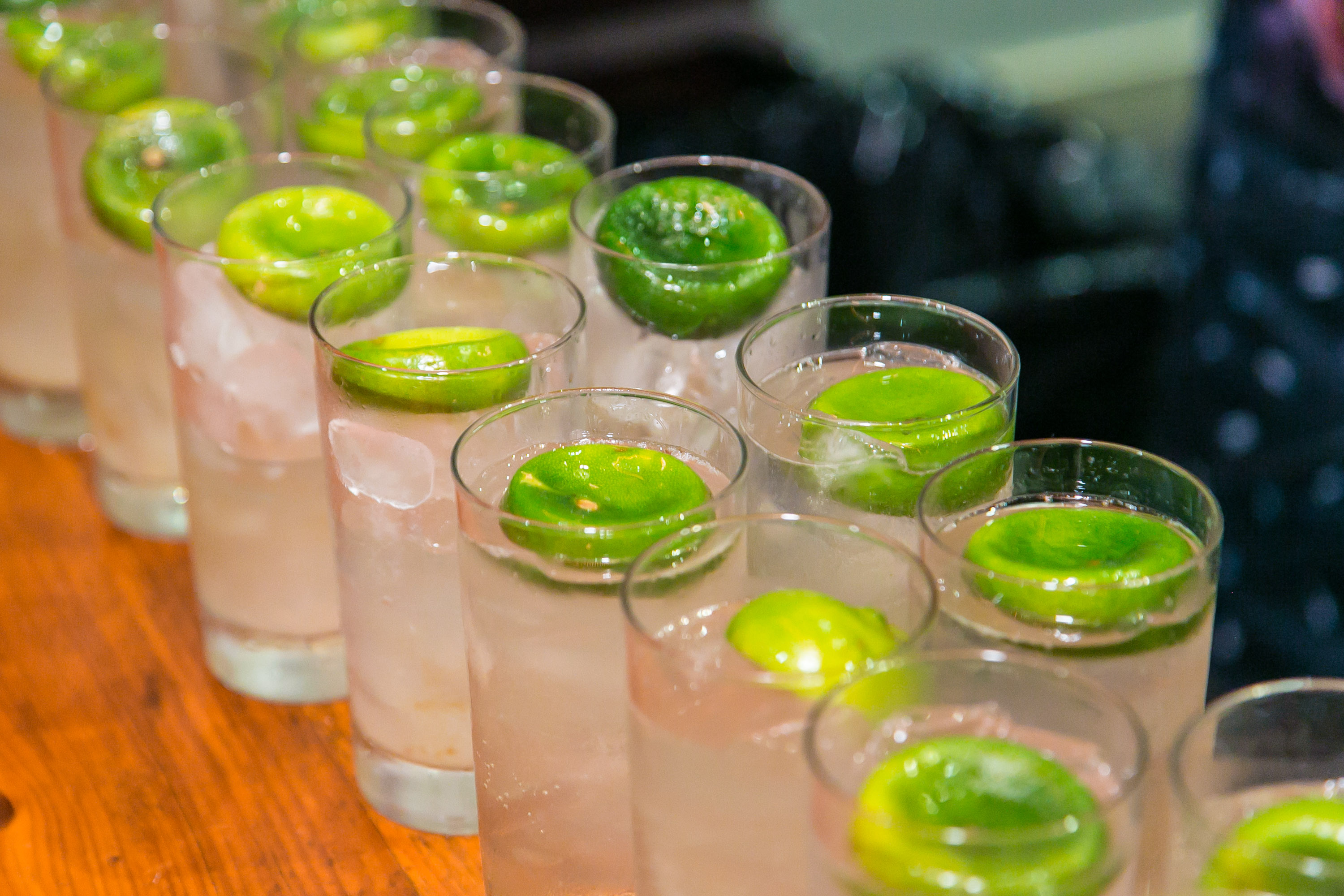
Memorable cocktails that rise to the top of the list
Stories curated by and photos by Jason Rowan (except where noted)

Photo by Virginia Miller

Most publications are busy prognosticating; focused on the year ahead, projecting trends and anticipating the future. But at INSIDE F&B we decided to take a moment before rushing pell-mell into 2012 and invite you to join us in relieving some stress that always comes with looking ahead. Instead, stop and smell the proverbial roses as we take a look back at some of the spirit industry’s best drinks tasted around the world.

Simon McGoram, Drinks Editor, Australian Bartender Magazine (boozebraggart.blogspot.com/)

The best drink I had all year had to come from one of the more unlikely places in Australia – Katoomba in the Blue Mountians in NSW. Once upon a time it was known as Sydney’s playground – especially during the roaring twenties with Gatsby-like characters parading around in finery. Now the place attracts only a few weekend tourists with its beautiful art deco cafes and hotels remaining for the large part empty and falling into disrepair.

I was up there with my partner for a Valentine’s Day getaway – with February being the middle of summer down under we were expecting swelter. Instead a cool mist hung eerily over the whole town as we walked up the steps of the Carrington Hotel for a pre-prandial tipple. The hotel by the way looks like something out of The Shinning and sure enough during the middle of the week the place was empty and spooky.

We were sat next to a roaring fire in an anteroom next to the grand 1930s ballroom. I was expecting that they might manage a decent G&T but I was pleasantly surprised by the quality of the cocktail offering. I ordered an Old Cuban – an Audrey Saunders masterpiece that had somehow found its way to this country town. My partner had a Bramble – a Dick Bradsell modern classic from London. The drinks were good. Not exceptional. bBut it was the more the fact that in rural Australia I could order drinks created by the best bartenders of London and New York whilst being transported to almost untouched art deco setting. I thought truly cocktail culture has come of age and perhaps one of America’s greatest inventions can be enjoyed at all ends of the earth.

Stephen Myers, Illegal Mezcal
(www.ilegalmezcal.com)

Drinking a Negroni at an outdoor cafe with a beautiful girl and a great friend on the Sardinian coast as the sun set over a Phoenician ruin and a lighthouse. Rather than the 1:1:1 ratio of the drink on its own it was all the elements of the time, place, people and the great drink itself that made it my best drink for 2011.

Philip Gandevia, cocktail bartender, Eau De Vie, Sydney
(eaudevie.com.au/)

We were having a meeting at Eau De Vie, going over our recipes and making sure that our techniques were uniform. We mentioned a Bijou (equal parts gin, Dolin and Chartreuse, orange twist and discard) and I made a casual statement that of course it was always stirred. One of our team, Taka Shino, demurred, saying that he always shakes his. Not only was this interesting in terms of discovering an inconsistency but it was also something I’d never entertained for this cocktail. “Well, let’s try them,” I said and we made side-by side identical Bijous, mine stirred and his shaken. When we tasted them I was fairly shocked to discover that I preferred the shaken. It was an excellent reminder that the junior bartender can show the senior bartender something Read the full article here »

THE MEAT OF THE MATTER

By Vincenza Di Maggio

Photo by Michael Harlan Turkell

Our national culinary identity is all wrapped up in meat.

Meat has taken on such a prominent role in the American diet that it’s become so ingrained into our national identity that most Americans, when eating a steak or biting into a juicy cheeseburger on any given day of the week don’t give this delicious luxury a second thought.

But it’s worth some consideration as evidenced by the fact that restaurant consultant Clark Wolf recently convened a whole panel of experts to discuss this very topic. Wolf notes, “The drought in Texas causing prices to rise, a greater basis of sustainability in animal practice, a strong interest in community husbandry, and the start of the holiday season make this [American’s consumption of meat] an important timely topic.”

He continues, “In a different economy our iconic protein warrants discussion. Our job is to highlight the many viewpoints not always addressed.

Wolf led the spirited discussion titled “The Changing Center of the American Plate” at New York University’s Fales Library. Joining him was Jenifer Harvey Lang, food journalist and Managing Director of the renowned Café des Artistes in Manhattan, Dr. Marion Nestle, the Paulette Goddard Professor of Nutrition, Food Studies and Public Health at New York University, Jeffrey Yoskowitz, writer and self-proclaimed Semitic Swinologist, Mark Gilman, cheese maker, and Betty Fussell, Food Historian & Author of Raising Steaks: The Life and Times of American Beef.

The participants each brought an original perspective to the table, and approached the topic from various angles, making for a very free-form dialogue.

Dr. Marion Nestle, known for her role as a driving force in the food industry, notes that meat consumption is directly related to the economic stability of a country; something that America has enjoyed a lot of over the years. She says, “American steak is here to stay. It’s iconic and you don’t bring down icons.” This is not only true of beef but also of pork. The pig, an animal whose meat is valued for its nutritional value and savory taste, is an iconic American animal as well.

Connecting to American food icons takes many forms. Though pork is not an acceptable meat in the Jewish culinary repertoire, panelist Jeffrey Yoskowitz appreciates the cultural impact the “other white meat” has in American society. He notes that soy pork alternatives have become popular among Read the full article here »