BRAIN FOOD: FRENCH CLASSICS MADE EASY By Richard Grausman

By Vincenza Di Maggio

If you’ve ever worked in a restaurant kitchen you know the stress – pots clanking, plates clattering, beads of sweat dripping down your forehead, and every swing of that kitchen door comes with another order to be cooked to perfection. The pressure is on, and you’re in the zone, but the smallest interruption – like a customer returning a dish because your line cook didn’t know how to properly fillet a fish – is enough to throw you off track.

A well-trained staff is a vital component to any kitchen running smoothly and presenting customers with a dining experience that makes them want to return. However, many of today’s generation of emerging chefs are coming to your kitchen without a degree in the culinary arts. They may have picked up some of their technique from working various kitchen jobs, but unfortunately, few can afford the resources necessary to pursue a classical culinary education and are therefore not equipped with all the cooking skills you need your kitchen staff to have.

That’s where Richard Grausman’s book, French Classics Made Easy, comes to the rescue.

Grausman, the acclaimed Cordon Bleu-trained culinary educator, author, and founder of the non-profit Careers through Culinary Arts Program (C-CAP, www.cccapinc.org), has avidly dedicated most of his career to educating disadvantaged youths in the foodservice industry. According to Jonathan Waxman, chef and owner of the NYC restaurant Barbuto (www.barbutonyc.com), “Richard Grausman is a true culinary icon. He really has no parallel, and his passion to teach is remarkable. He is the embodiment of our culinary education.”

In 1988 Grausman published his first cookbook At Home with the French Classics “as a way to document what [he] had been teaching,” he says. Grausman has now graced us all with a special gift, the re-release of his cookbook, French Classics Made Easy, which has been re-titled to reflect Read the full article here »

DON’T MISS – RUSSELL’S RESERVE

By Francine Cohen

There are bourbons that make you go, “Whoo-ee, boy! This is some damn fine bourbon. It’ll put hair on your chest!” And then there’s the kind of bourbon you’ll sip and it makes you think that despite the fact you’ve never been south of the Mason-Dixon line you’ve actually spent weekend afternoons sitting on a wide, sunny porch flanked by tall pillars, rocking back and forth and enjoying great conversation as the creek trickles softly down the hill.

Russell’s Reserve (www.wildturkeybourbon.com) is this bourbon. The bourbon that transports you from your mundane and frigid city-bound existence to something much more laid back. It’s the kind of bourbon that you could sip at 8:00 a.m. and not feel a lick of guilt about it aside from the fact that you didn’t add it to the maple syrup so your family could enjoy it too.

Russell’s Reserve is a hand-crafted bourbon born of a family business that reflects the 80-plus years of combined experience the father and son duo of Jimmy and Eddie Russell posessess. Master Distiller, Jimmy Russell has been making bourbon in Lawrenceburg, Kentucky for 56 years and has joined the ranks of the greats when it comes to his legendary craftsmanship. He collaborated with his son Eddie, a relative newcomer with 30 years under his belt, to create the acclaimed Russell’s Reserve. Jimmy Russell has worked at the distillery since 1954 and his devotion to his whiskey making comes from his family. His grandfather worked in the distilling business, as did his father before him.

Russell’s Reserve is a very special clean, rich and full bodied bourbon that’s bottled at 90 proof. Rich with notes of toffee and oak on the nose it crisply delivers the liquid with hints of sweet caramel and vanilla.

Perfect for any time of day. Or night (if you must wait).

Harvest Walnut Old Fashioned
Created by James Moreland


3 bar spoons Harvest Song Walnut Syrup
2 oz. Russell’s Reserve
3 Kingston Cubes (or 1 regular sugar cube)
Lemon peel
1 Harvest Song Walnut

Muddle lemon, cube(s), syrup
Add bourbon and stir
Add ice and stir
Slice walnut in half and place in glas
Pour in drink and garnish with lemon peel and serve with a spoon

(For more information: Kingston cubes – www.kingstoncubes.com; Harvest Song – www.harvestsongventures.com)

EAT HERE NOW – ADELAIDE

By Jeff Miller
All photos (except where noted) courtesy of the South Australia Tourism Commission

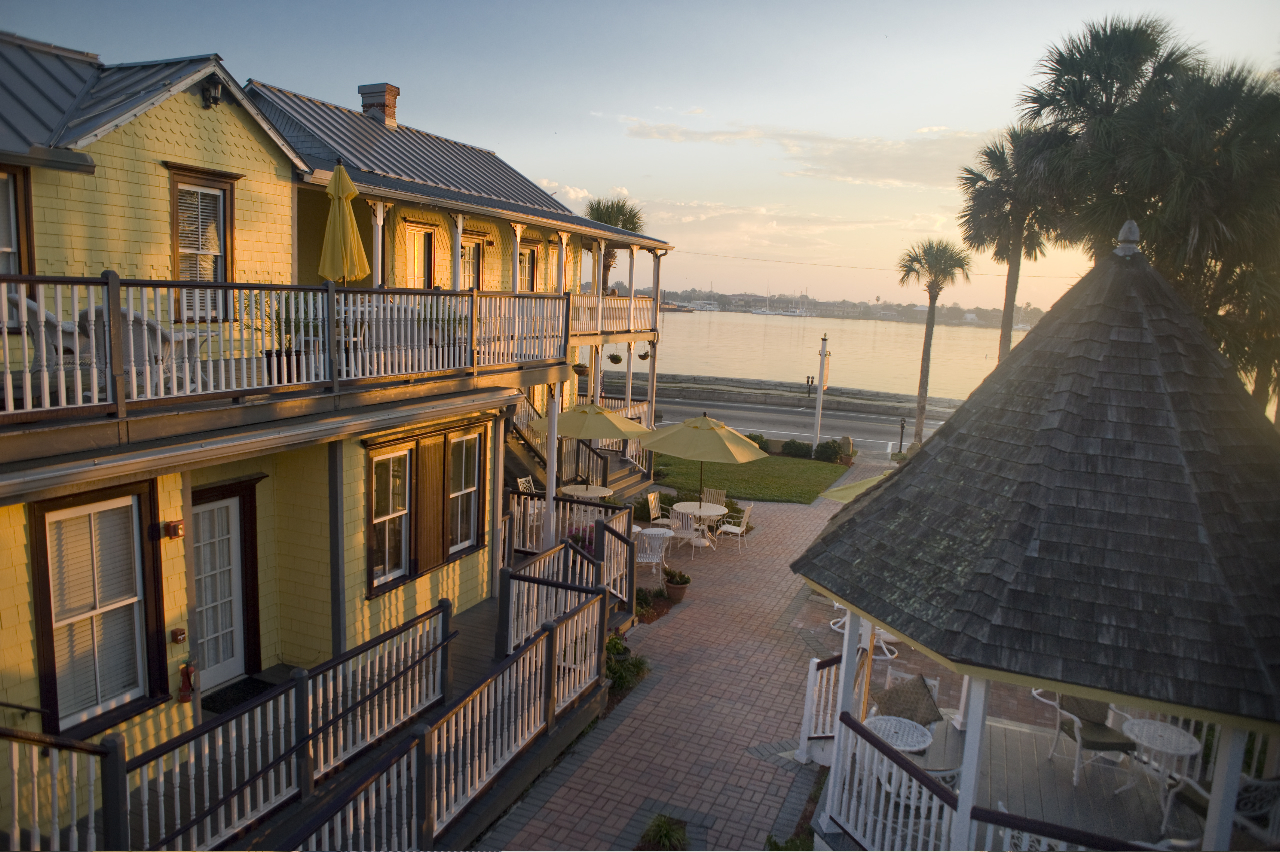
While it may not have Sydney’s opera house or Melbourne’s stylish reputation, Adelaide, South Australia is a culinary hidden gem, thanks in no small part to its location: because of its temperate climate and seaside location, the city of 1.2 million’s bustling with fresh fish, farm-to-table veggies, and fine wine from the nearby Barossa and Clare Valleys, each of which is also blessed with a smattering of fine restaurants. Add to that a youthful population (colleges are the lifeblood of the city’s economy), and you’ve got a city that is exploding with an ever-expanding selection of dining destinations, plus a wealth of cultural worth, with museums dedicated to Australia’s unique aboriginal culture and long-standing art scene and old-school architecture that calls to mind the gorgeous facades of classic New Orleans.

Grub wise, in-town, the food scene’s dominated by the massive Central Market, a bustling mix of chef-friendly produce stalls and specialty stores, the success of which has spawned a mini-business of farmers markets selling everything from homemade spice jam to hand-caught fresh scallops.

Photo courtesy of The Grace

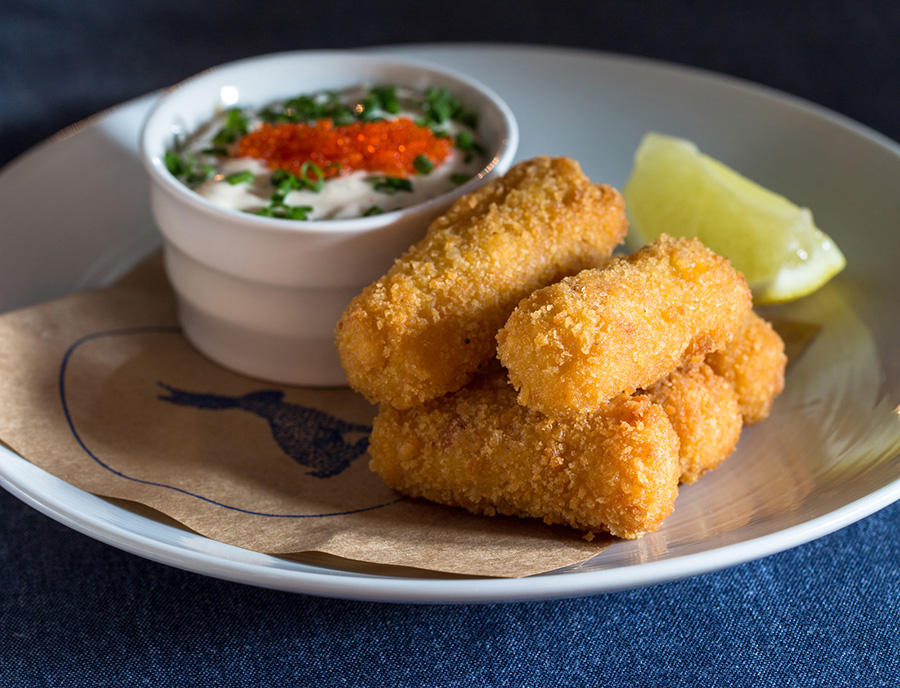
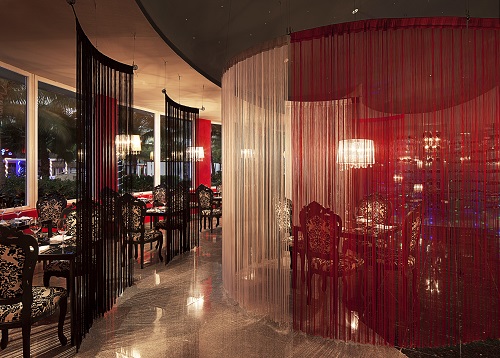
Restaurant-wise, modern-looking spots like the American-influenced The Grace – The Establishment (127 The Parade, Norwood; http://www.thegrace.net.au/home.html) a slick-looking tapas spot stacked with well-heeled ladies and slim-tied men, share space with more traditional dining experiences like the one at Chianti Classico (160 Hutt St; http://www.chianticlassico.com.au/), where a hearty seafood stew reigns supreme. Still, getting into the nearby wine country’s the way to be, with outdoor, among the vines-dining at Skillagolee (email for directions; http://www.skillogalee.com.au/) worth every moment of the drive there.

For even more picks in and around Adelaide and South Australia, we asked three experts:

Photo Courtesy of The Louise

The Restaurateur: Mark McNamara is one of South Australia’s most well-respected chefs; his award-winning restaurant, The Appellation, is located at the beautiful Louise Hotel in the Barossa wine region.

Ferment Asian: “Unlike most Vietnamese restaurants that have the same giant selection cookie cutter menus, “Ferment” has a tiny seasonal card and [the chef] cooks real food. For me it’s like dining with Vietnamese friends – it’s all cooked to order with passion and the flavours burst with freshness.
(90 Murray St, Tanuda) (http://www.fermentasian.com.au/)

Fino: “Simple, honest local ingredients cooked with great skill and passion and more than a little rural Italian influence with a menu that follow the season. The wine list is again short but very sharp with some amazing wines by the glass.” (8 Hill St, Willunga) (http://www.fino.net.au/)

The Wheatsheaf Hotel: “The Wheaty” has become the bar of choice for those that like to drink good beer, wine or whiskey (they have a pretty lineup in gin and rum as well) with at least 10 beers on tap including one on a hand pulled Read the full article here »

ROCKS STARS, PROFILES IN CUBAGE – TAD CARDUCCI

By David Ransom

There was a period when a prospective employer looking at Tad Carducci’s resume may have written “underachiever” in the margin. His father would probably have agreed…

Yet, delve a little deeper into Tad’s life, and one will see that, contrary to what seemed for some people to have been, at times, a relatively un-inspired chosen path, there’s an underlying brilliance and incredible work ethic that has launched him straight to the upper echelon of the cocktail world to join names like DeGroff, Reiner, Abou-Ganim, and Saunders.

But was this always the plan for Tad? Probably not; and he admits it. The oldest son of an attorney and social worker, Tad grew up in the suburban New York City town of Hackensack, New Jersey with dreams of becoming an actor (much to his father’s chagrin). He realized early that he had the gift of charm, and didn’t have to put much effort in to get by socially or in school. “Being the oldest, I got away with a lot of shit,” he says, “my siblings got away with nothing.” He admits, even now in his thirties, to still having a “healthy case of ADD,” and that he was “never the best student.” At one time, his father even threatened to send him to West Point so he’d “shape up.” But he also showed great intelligence early, getting accepted to Cornell Hotel School. Of course, he never went, eventually enrolling at Rutgers University to study his true love of acting.

That love of acting and performing has been a thread almost his entire career, popping up many times over the years. Sometimes, it’s ruled his direction, like the time he moved to Dublin, Ireland to play guitar in a band, and other times it’s just popped up briefly, like when he juggles, does magic tricks, or rides his unicycle. Yet, whether it’s been an undercurrent helping direct his life’s flow, or a full blown tsunami of energy, like when he acted Off-Broadway or did “flair bartending” (think Tom Cruise in Cocktail), that artistic streak has also helped Tad become that One in a Million success story in an industry populated largely by people who will never be recognized for their talent or work ethic.

Tad’s road to the top started like many others’, at the bottom. His first job in the hospitality business was as a busboy in a wedding hall. One day the bartender no-showed and Tad was thrown behind the service bar and taught to make the drinks for the waitstaff. He realized he liked it, and by the age of 20, after stints making pizzas and working at MacDonald’s (still an admitted guilty pleasure), was bartending full time.

When he left the ‘burbs for the big city to follow his dream of acting, like many others he paid the rent working in restaurants, sometimes behind the bar, sometimes not, but always enjoying what he did, and always doing well. As his enjoyment of the hospitality business grew, the acting bug lessened, and he moved full-time into restaurant work, eventually parlaying his growing love of wine into a job at Windows on the World as Assistant Cellar Master under Kevin Zraly and Andrea Immer-Robinson. While he eventually went back to bartending, it was not before he became a certified Sommelier by the Court of Master Sommeliers, and gained his Advanced Certification from the Wine and Spirits Education Trust (so, he CAN study…).

“My strength in this business is hospitality,” Tad says, “and welcoming, entertaining, and Read the full article here »

DON’T MISS – MOZO

The gift that just keeps giving
By Francine Cohen

This holiday season there are plenty of gifts exchanged; some awful that you can’t re-gift them fast enough, and others so perfect only you could have picked them out yourself.

MOZO shoes are that one gift you’ll be glad you gave yourself; so stylish and comfy that nobody else (but another chef/bartender/server/manager) would understand the bliss you feel knowing you’ve stopped the pain in your back and your feet before it even had a chance to flare up.

MOZO brand President, Stuart Jenkins, explains why his team of shoe designers and engineers from the Deckers Outdoors (www.deckers.com – the parent company who also brought us TEVA and UGG) partnered with chefs Chris Consentino, Macus Samuelsson, and Aaron Sanchez to design these new shoes for those who spend their working hours in the back and front of house. He says, “Why is it that someone should be spending 8-10 hours a day on their feet without having the benefits of comfort and sustainability of comfort? We would like to think we can make any 8 hour shift better than it has been in the past.”

He continues, “Our shoes feature The Uniframe design which includes MOZO’s trademark gel insoles and slip-resistant outsoles, as well as side vents that aid in moisture and heat management. MOZO offers durability in cushioning, traction, support and craftsmanship and has certified slip-resistant outsoles through a unique Spider Traction™ compound. The exclusive TripleFit System™ lets users customize the volume inside their shoe by a half size, larger or smaller. The one thing this line of product brings to the industry is that they are extremely light weight while offering proper cushioning and insoles and construction. MOZO gets people out of sneakers and puts them into traction for safety.”

With the intent of creating shoes that are made to mold to the foot and let it breathe, a critical element during active and lengthy shifts, Jenkins and his team set out to make a shoe that is not only functional but also fashionable and fits the lifestyle. He explains why, “When I watched through the trade shows and looked at the shoe exhibits I saw what people were making and you had two choices, black or white. It seemed to me that the product the shoe industry was offering was out of touch and there was a huge misstep between the market and the products it was being offered. There was no real choice, no sense of performance, no artisanship, no inventiveness. Yet when you talk to the chefs and observe their culinary style you realize that they are athletes, creators, and perfomers, and they do all this under tremendous pressure.”

Chris Consentino of Incanto (www.incanto.biz), Boccalone (www.boccalone.com) and Offal Good (www.offalgood.com) knows a little something about pressure Read the full article here »

DON’T MISS – FERRAND 1840

By Seánan Forbes

A product of passion, tradition and collaboration, Pierre Ferrand’s new-old Cognac – the 1840 – is built for industry.

More and more, bars and restaurants take pride in serving classic cocktails. That requires pouring the right spirit in the glass. As Ferrand Vice President Guilaume Lamy observes, “Cognac was the base for mixing in the nineteenth century.”

It pays to know your history. These days, customers do – and they expect the highest quality ingredients from the bar as well as the kitchen, with respect for source and tradition.

So it was a perfect time for Ferrand to dip into the past and reproduce a period cognac. For Ferrand, Lamy says, “this is a historical thing to do: to reconstruct a cognac that was drunk back in 1840.”

Alexandre Gabriel, Ferrand’s owner, didn’t work alone. In a different kind of spirit – one of international creativity – he invited a friend, American author-historian David Wondrich, to join the project. Wondrich remembers the call. Gabriel said, “I’ve got this project you might be interested in . . .” Bringing history alive? There’s not a drop of doubt.

According to Lamy, Wondrich’s input was vital. “Alexandre is very knowledgeable about taste. For history, David is Read the full article here »

BRAIN FOOD: MILK AND COOKIES: 89 Heirloom Recipes from New York’s Milk & Cookies Bakery

By Victoria Ruvolo

As we head from Thanksgiving, our nation’s most food-centric holiday, towards Christmas and Hanukkah, the annual drive to both bake and consume large quantities of pies, cakes, cookies and candies that evoke joyful childhood memories is once again upon us. It’s this time of year, more than any it seems, that industry professionals from chefs to caterers are called upon by their clients and guest to create the warming, holiday inspired baked goods we all remember enjoying as when we were young and carefree.

Need a little help getting your recipe portfolio together this year? Milk & Cookies: 89 Heirloom Recipes from New York’s Milk & Cookies Bakery is it. Written by French Culinary Institute graduate and successful bakery owner, Tina Casaceli. Casaceli is the genius behind the now famous Greenwich Village bakery Milk & Cookies which opened in 2006.

For anyone who has never been, Milk & Cookies is the type of bakery that excels at bringing your childhood favorites spiraling back into your daily life. It’s everything you could ever want in a local cookie bakery, down to the sweet smells of vanilla, sugar, and butter wafting from the door.

Milk & Cookies the book has everything you could ever want in a cookie book. It’s filled to the brim with easy, straightforward recipes paired with beautiful photographs of mouthwatering cookies in every flavor. The recipes are simply organized by base, making it easy for any reader to find their particular favorites.

Putting pretty pictures and delicious recipes aside, most of us in the food industry have baked a plate of cookies before so why should we read Milk & Cookies? Easy; Casaceli gives her reader more than just recipes,she gives them Read the full article here »

ROCKS STARS – KIT CODIK

LIQUOR LIBERATED
Liquor.com Founder Introduces Millions of Readers to Better Drinking
By Francine Cohen

It’s a good thing that in his 1922 poem The Wasteland TS Eliot referred to April as the cruelest month; because if he had written “November is the cruelest month” he would have confounded the next generation’s sociologists as they look back into culinary history to pinpoint the moments when Americans suddenly became food and drink obsessed and embraced terms like “foodie” and “cocktailian.”

Why confusing to call November cruel? Because if one tracks factoids about the hospitality industry’s history and progress then they know that November is a monumental month worth heralding. It’s in this month that the two media launches which entirely changed the face of how modern day Americans find pleasure in food and drink, and how they interact with chefs, farmers, purveyors and bartenders, happened; in November 1993 we saw the first Food Network broadcast (then called Television Food Network) and November 2009 marks the date the month that Liquor.com launched, opening up a whole new world for spirits aficionados.

In our book, there’s nothing cruel about any of that. In fact, it’s quite the opposite. There’s great reason to celebrate the immediate embrace of Liquor.com’s content and the site’s rapid growth to over 100,000 email subscribers since launch (not to mention hundreds of thousands of Facebook fans and strong partnerships with other media outlets such as Huffington Post that drives the number up to touching 1-3 million consumers per month); it all has proven to be a boon for the entire hospitality industry. And, though the food revolution has been going on for a while, it took the introduction of a spirited website to drive that passion for good drinks and quality alcohol to the forefront.

Funny that the website which makes better spirit knowledge accessible all started over a late night beer. But then again, great ideas often do. Liquor.com founder Kit Codik explains how he arrived on the scene and unknowingly changed the face of drinks appreciation, “I went to Tales (www.talesofthecocktail.com>) two years ago before I started Liquor.com – I didn’t know anyone. All I was there to do was to learn the industry. I met Noah [Rothbaum – current Editor of Liquor.com] there and we had an Abita (www.abita.com) in a plastic cup at Absinthe House from 5-6.”

At the time that Codik and Rothbaum were bonding over Abita Liquor.com didn’t yet exist. This past year Liquor.com was the festival’s largest media sponsor, but back then, over that beer, Codik was in New Orleans strictly on a research mission to see what was percolating in the spirits industry and determine how he could tap into it in a way that opened up the marketplace to consumers in a consolidated and compelling way they’d never seen before while exposing brands to potential new consumers.

The serial (and successful) entrepreneur came to the cocktail festival with a name in mind for his website and realized he needed to do more research into the booze business. Codik admits that his approach to building Liquor.com is not the traditional way to get a business off the ground. But it seems to be working just fine. He comments, “In 2008 I was scratching my head and wondering why when it is an industry generating $60 billion at retail and $20 billion at wholesale, the brands’ digital advertising spends were only 1 to 3% of their marketing budgets versus the 10 to 12% that other categories were already spending on digital marketing.”

He continues, “You don’t normally do this, but I actually built this backwards with a name. Usually you start with a market problem or opportunity and that seeds the project. Instead we started with a name and determined whether there was an opportunity to build the tremendous brand without a capital outlay. It was a tough time to raise capital, but I had been in the start-up world for a long time and had enough people in my network and it went from there. My business partner and I met the guy who owned the domain name. He pitched us to work with him on a different business plan and, while we loved the name and loved the guy, we didn’t love the plan. So we went our separate ways. He called us again later and ended up saying he’d take $4.5 million for the domain name. Candy.com had just sold for $3 million and Toys.com had just sold $5 million. We knew the domain is valuable and it’s a huge industry so we said to him ‘you give us the domain and you’ll get a seat on the board, and equity, and we’ll set a finite timeline to research the industry.’”

This arrangement worked. And, despite Codik’s admitting he was more of a wine drinker than a spirits guy prior to the launch of Liquor.com and had no real knowledge of the industry at the time he undertook this venture, Codik took to it quickly and intensely. He says, “It’s funny how things come together. I’m so passionate about building the business and, while I think about Liquor.com as a digital business, fundamentally we’re in the spirits industry. It permeates everything we do and I’m very passionate about it. I feel like I found my home.”

His home was centered on a vision that he explains as this, “Let’s build an email centric business that has a highly targeted audience.” Codik envisioned a site that was both approachable and authoritative. To that end he created a “dream team” board of industry advisors Read the full article here »