BRAIN FOOD: “THE MAN WHO CHANGED THE WAY WE EAT”

By Thomas McNamee
Story by Mort Hochstein

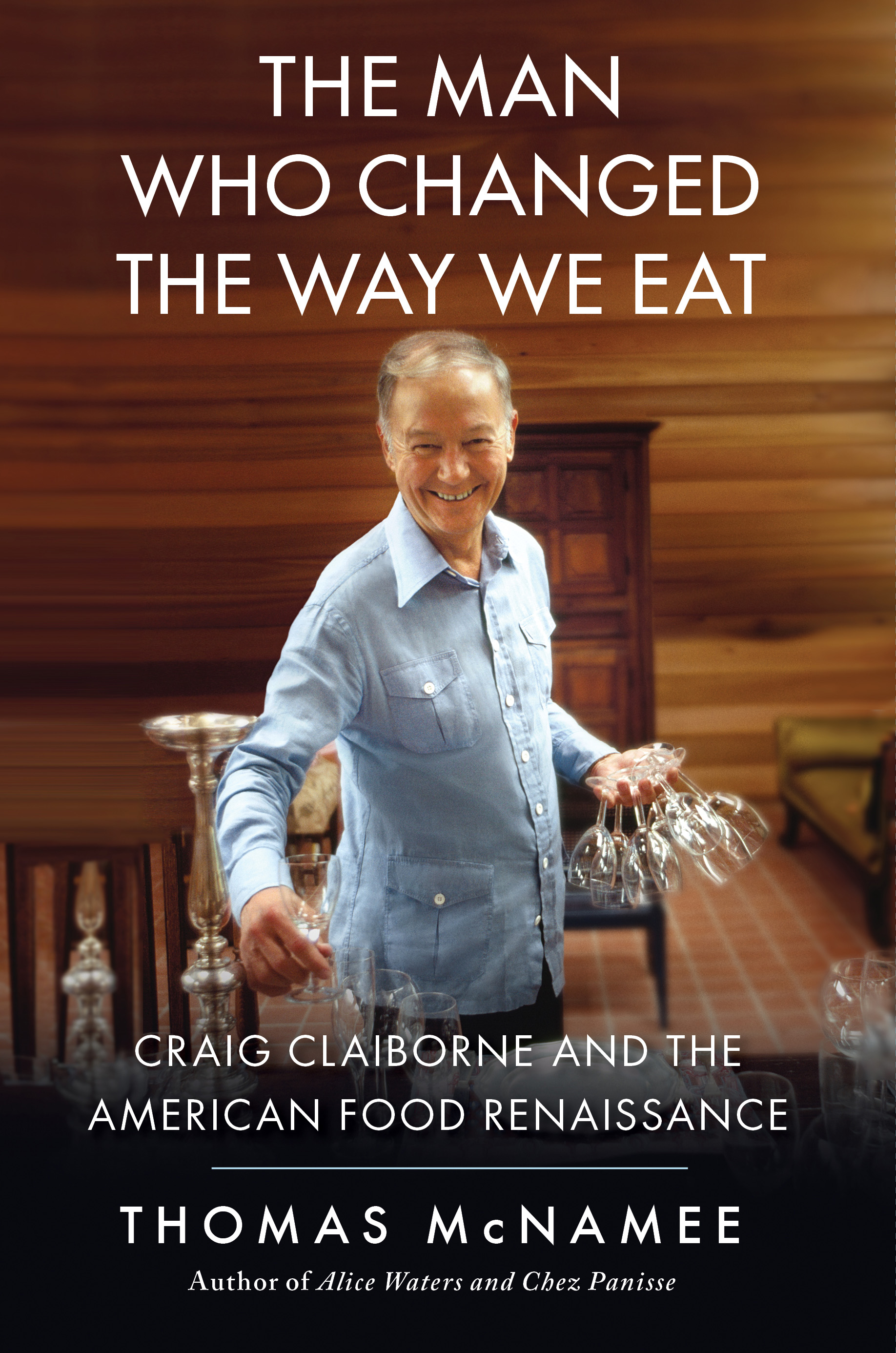
It was a surprise to me when, recently, I mentioned Craig Claiborne to a knowledgeable friend and he did not recognize the name. In the sixties and seventies, Claiborne dominated the Manhattan food scene and had a nationwide and international influence as restaurant critic and food editor of the New York Times. Quiet and retiring, he was a powerhouse who wrote two dozen books and fathered restaurant criticism as we know it today.

In those years, I produced Claiborne’s appearances on the Today program and occasionally accompanied him when he reviewed restaurants. On one memorable occasion in the mid-sixties, I worked with him as he gave sushi its first major showcase on television. I thought I knew the man. How wrong I was.

A stunning new biography, The Man Who Changed The Way We Eat, portrays Claiborne’s contribution to gastronomy, in the palaces of haute cuisine and in the kitchens of cooks, great and humble. Author Thomas McNamee celebrates the mild mannered Southern gentleman who propelled the food revolution of the last century and we learn almost more than some might care to know about his troubled private life.

McNamee, who also gave us Alice Waters and Chez Panisse, traces Claiborne’s culinary career from his childhood in the kitchen of a renowned Mississippi Delta boarding house where his mother, Miss Kathleen, served the hush puppies and country ham of the region, but also offered sophisticated Creole cuisine which she had learned in New Orleans. He traces another food influence, Claiborne’s navy stint in World War Two, service under fire on the cruiser Augusta in the Mediterranean and eight months based in Morocco and Algeria where he discovered French bistro cooking along with the tagines and spices of North Africa.

After military service, Claiborne studied classical French cuisine and hospitality at the famed Swiss hotel school in Lausanne and returned to the States after two years to begin a campaign that would take him to the New York Times. He worked as a publicist—unhappily-, tended bar and was a receptionist at Gourmet, writing and editing without a byline. He also wrote freelance and his articles brought him in 1957 to the attention of the editor of the Times’ women’s pages, who took a chance on an unseasoned writer, but not before passing him on to Turner Catledge, her managing editor. Catledge, like Claiborne, had attended Mississippi State College and that, Claiborne noted in a memoir, helped clinch the deal.

But nothing happened accidentally with Claiborne. He knew that he’d have to interview with the tough, but folksy editor, and came in ready to play the ‘ol’ boy’ routine with Catledge. The two Mississippians palavered Delta fashion; reminiscing about school days down south and Claiborne was on the first step to inciting a food revolution.

Once on staff, Claiborne slogged his way through assignments, most not related to restaurant reviews. Cannily, when he did review restaurants, he invited senior editors and their wives to join him; on the company, of course. His goal was to make them court him and he dreamed up pleasurable assignments to make research enjoyable. He avoided restaurant reviews as much as possible because Read the full article here »

BRAIN FOOD – Oldman’s Brave New World of Wine

by Mark Oldman
Story by Vincenza Di Maggio

There are two kinds of wine enthusiasts. There are the wine snobs, those who have perfected the ever-so-gracious swill of the wine glass (utilizing just the right amount of wrist action), are scandalized by the mere thought of putting an ice cube in their wine, and who can’t resist using words like “spoofalated,” “obsequious,” and “malolactic fermentation,” – terms that anyone not a member of the insider world of wine might confuse with a foreign language.

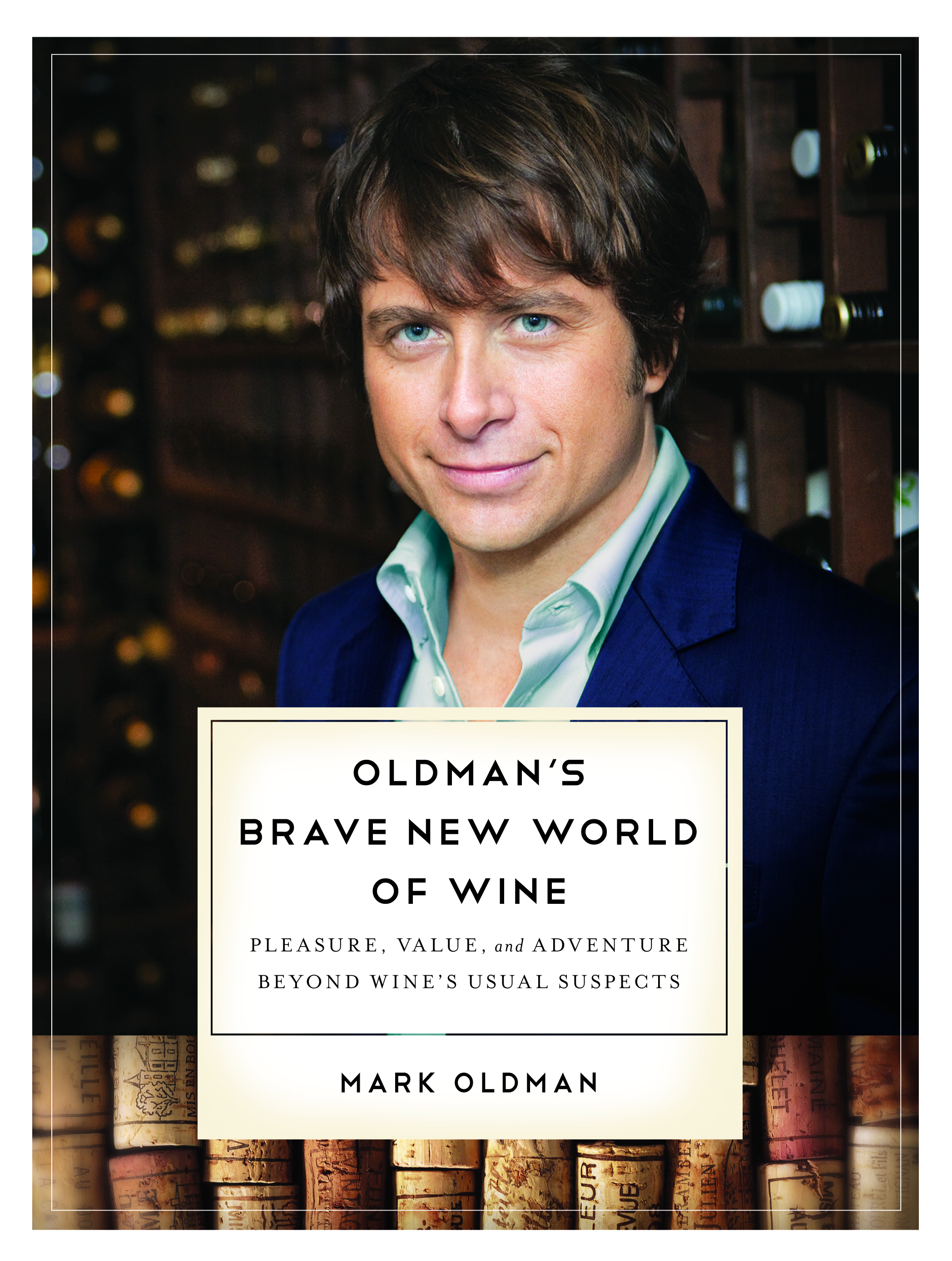
There are these people, and then there’s Mark Oldman – whose book Oldman’s Brave New World of Wine, winner of the 2011 Georges Duboeuf Wine Book of the Year Award, proves that this sort of wine personality is rare; and a welcome exception to the rule.

Let’s face it; the majority of our guests are not wine experts. Oldman sympathizes with those wine lovers who find themselves at a loss when it comes time to order from a wine list. He says, “How is one supposed to choose, make a $30-50 investment within 30 seconds, based on what producer name is? Sometimes I look at wine lists and shake my head. How is someone supposed to know how to order with just the basic information?”

In his book Oldman put together a list of “Brave New Pours” – unfamiliar wines that are either on the cutting-edge or worthy of rediscovery – and is clearly descriptive in his explanations of the qualities of each wine type. The book is filled to the rim with insightful findings, such as his discovery (wine snobs continue reading at your own risk) that some red wines are actually better when “shocked” or slightly chilled in an ice bucket, and his innovative deduction that rose’ wine is underappreciated or, as he so hilariously puts is, “Is misjudged as the vinous equivalent of Mariah Carey’s hemline or Donald Read the full article here »

BRAIN FOOD – Ecole du Valrhona’s Cooking with Chocolate: Essential Recipes and Techniques

By Vicky Ruvolo Minchala

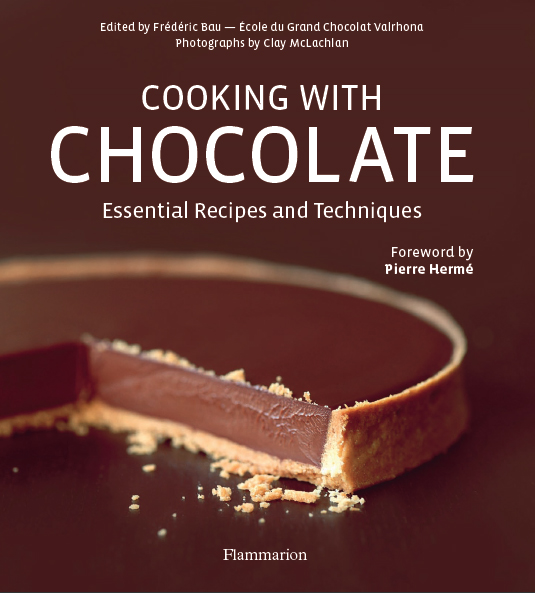
There are dozens upon dozens of chocolate technique cookbooks in this world. However, Frédéric Bau’s Cooking with Chocolate: Essential Recipes and Techniques stands tall above the competition. Although many of the recipes are straightforward enough for most amateur cooks to understand, this essentials book is clearly better suited for professionals.

Valrhona asked eight world renowned chocolatiers to break down the basics and go beyond in this one-stop-shop chocolate tome. Bau slowly introduces his reader to the world of chocolate with basic techniques such as bonbon fillings, pastry doughs, mousses, and ice creams. Then the pages swiftly change gears to discuss chocolate theory; cocoa percentages, chocolate myths, and the process from bean to bar. Before the reader realizes it, they’ve have begun to comprehend the essentials and are reading (and more importantly understanding) the more advanced recipes that follow.

Private chefs and caterers will enjoy the section on Candies and Confections since every recipe is simple, elegant, and beautifully bite sized. The chocolate caramels in this section are a wonderful starting point for any chef looking to add a signature touch to a dessert tray. Need a little more inspiration? Try making the Sesame Topped Choco-Cinnamon Ganaches; clients will think you hired a chocolatier for their event. Professional pastry chefs will enjoy the section titled Trends which explores the savory side of chocolate in recipes such as Lobster Jus under a Light Cloud of Bittersweet Chocolate or Cod Fillet with Green Tea Béarnaise and Smoked Milk Chocolate Sauce.

But wait, there’s more! For those of you who learn better by watching someone else do it first, Valrhona includes an instructional DVD. Is there anything else you could ask for in a technique book? The Ecole du Grand Chocolate Valrhona makes the essentials of chocolate both approachable and professional for any chef looking to either brush up or expand their chocolate knowledge.

Leave it to the Ecole du Grand Chocolat Valrhona to create one of the most comprehensive chocolate techniques book published to date.

Chocolate Flavored Caramel Bonbons
Makes 30-40 caramels

Ingredients:
5 ½ oz (50g) bittersweet chocolate, 70% cocoa
1 cup (250ml) whipping cream
1 pinch of salt
1 ¼ cups (9 oz/250g) granulated sugar
2 tsp. (15g) honey
1 tbs. butter, diced

Equipment:
Silcone molds/ or Confectionery frame and baking sheet

Procedure:
A day ahead:

Chop the chocolate and melt it slowly in a bain-marie or in the microwave oven (on “defrost” or at 500 W maximum, stirring from time to time).

Add the salt to the cream and heat in the microwave oven so that it is warm enough to be added to the caramel.

In a large saucepan, carmelize the sugar with the honey to make it a nice, light caramel.

Being very careful, slowly pour the hot cream over the caramel so that it does not splash.

Heat the mixture to 239 degrees F (115 degrees C) and pour it over the melted chocolate. Add the diced butter and mix it in quickly.

Pour into a confectionery frame or silicone molds and leave to harden overnight.

Next day:
Cut into small squares.

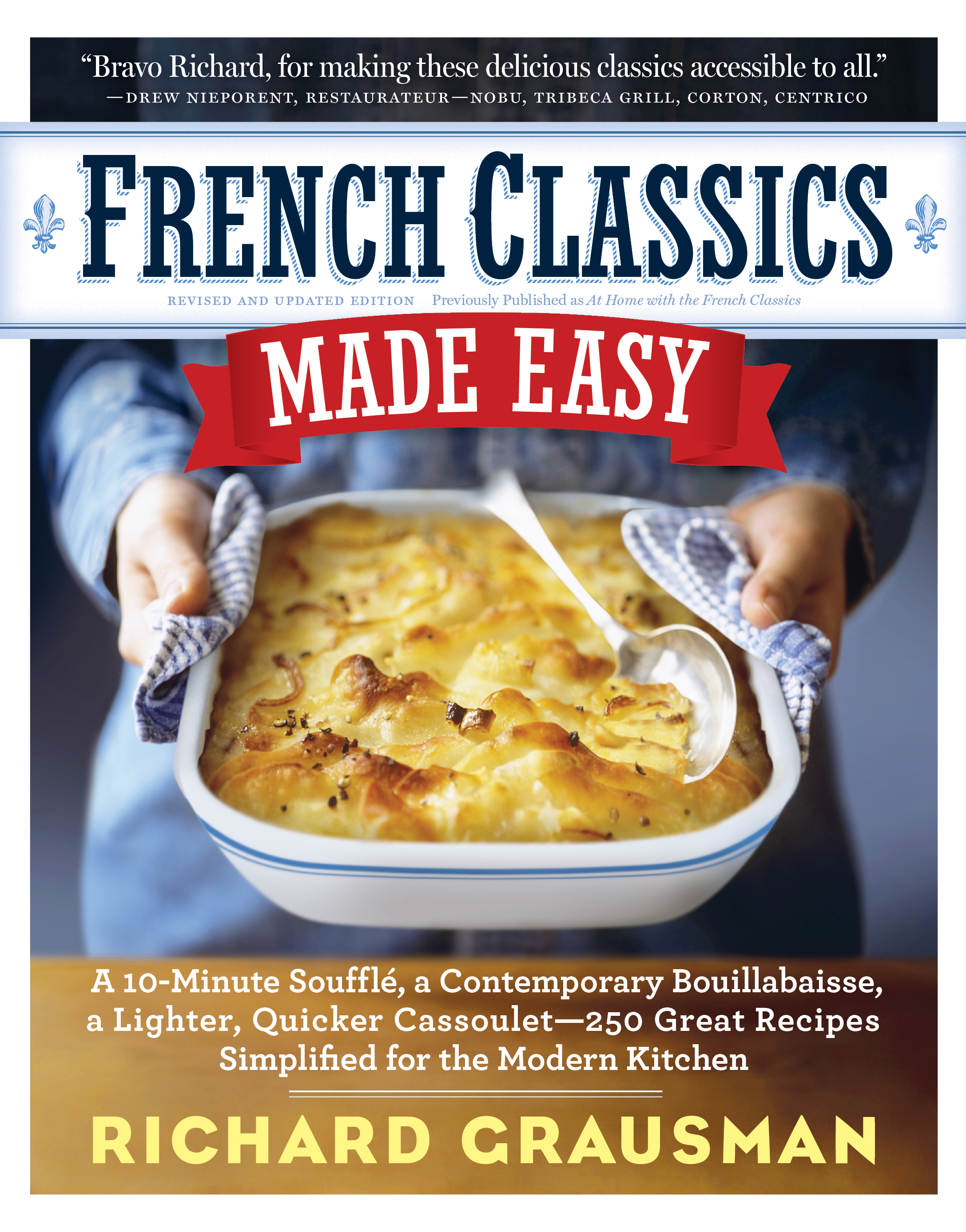
BRAIN FOOD: FRENCH CLASSICS MADE EASY By Richard Grausman

By Vincenza Di Maggio

If you’ve ever worked in a restaurant kitchen you know the stress – pots clanking, plates clattering, beads of sweat dripping down your forehead, and every swing of that kitchen door comes with another order to be cooked to perfection. The pressure is on, and you’re in the zone, but the smallest interruption – like a customer returning a dish because your line cook didn’t know how to properly fillet a fish – is enough to throw you off track.

A well-trained staff is a vital component to any kitchen running smoothly and presenting customers with a dining experience that makes them want to return. However, many of today’s generation of emerging chefs are coming to your kitchen without a degree in the culinary arts. They may have picked up some of their technique from working various kitchen jobs, but unfortunately, few can afford the resources necessary to pursue a classical culinary education and are therefore not equipped with all the cooking skills you need your kitchen staff to have.

That’s where Richard Grausman’s book, French Classics Made Easy, comes to the rescue.

Grausman, the acclaimed Cordon Bleu-trained culinary educator, author, and founder of the non-profit Careers through Culinary Arts Program (C-CAP, www.cccapinc.org), has avidly dedicated most of his career to educating disadvantaged youths in the foodservice industry. According to Jonathan Waxman, chef and owner of the NYC restaurant Barbuto (www.barbutonyc.com), “Richard Grausman is a true culinary icon. He really has no parallel, and his passion to teach is remarkable. He is the embodiment of our culinary education.”

In 1988 Grausman published his first cookbook At Home with the French Classics “as a way to document what [he] had been teaching,” he says. Grausman has now graced us all with a special gift, the re-release of his cookbook, French Classics Made Easy, which has been re-titled to reflect Read the full article here »

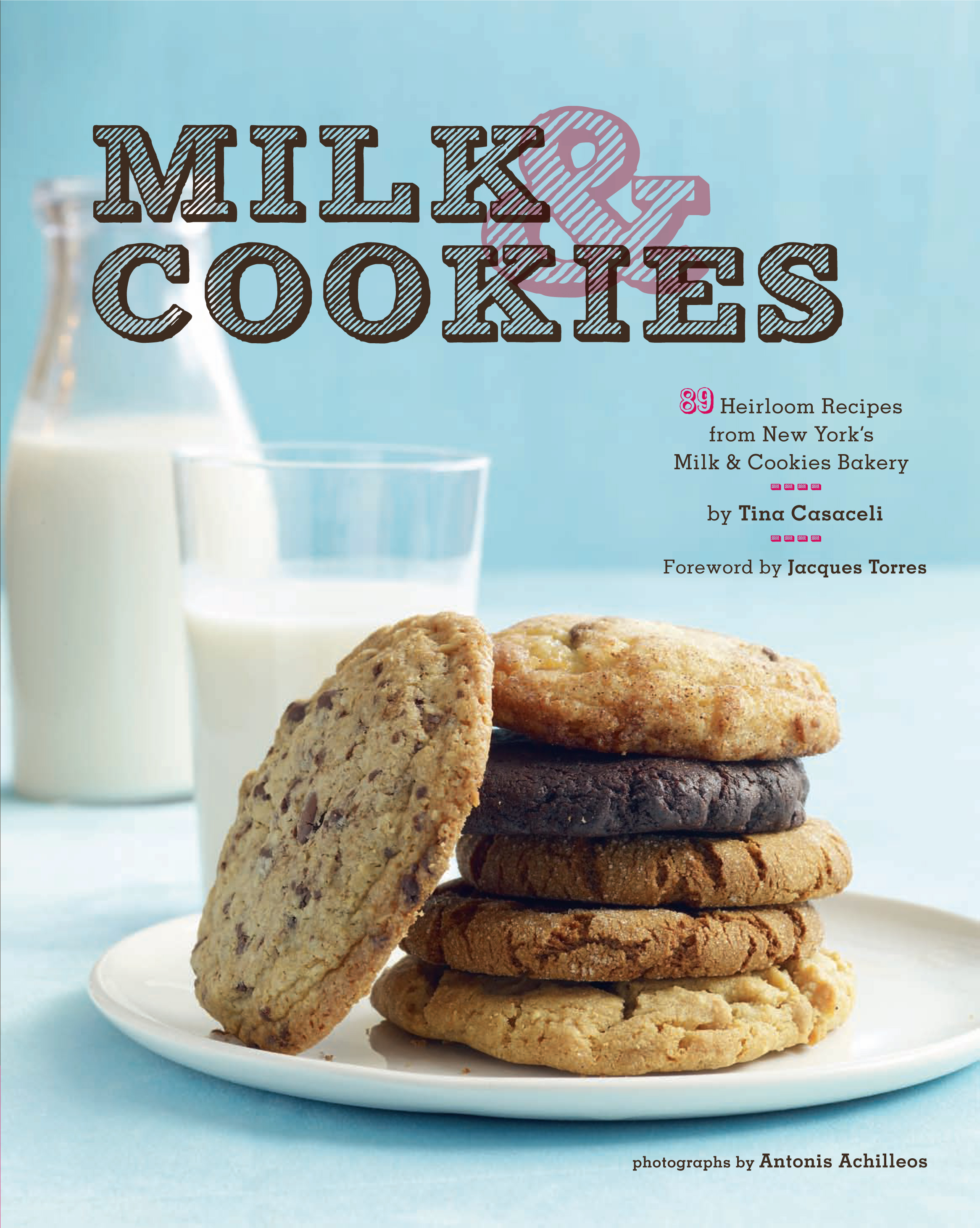
BRAIN FOOD: MILK AND COOKIES: 89 Heirloom Recipes from New York’s Milk & Cookies Bakery

By Victoria Ruvolo

As we head from Thanksgiving, our nation’s most food-centric holiday, towards Christmas and Hanukkah, the annual drive to both bake and consume large quantities of pies, cakes, cookies and candies that evoke joyful childhood memories is once again upon us. It’s this time of year, more than any it seems, that industry professionals from chefs to caterers are called upon by their clients and guest to create the warming, holiday inspired baked goods we all remember enjoying as when we were young and carefree.

Need a little help getting your recipe portfolio together this year? Milk & Cookies: 89 Heirloom Recipes from New York’s Milk & Cookies Bakery is it. Written by French Culinary Institute graduate and successful bakery owner, Tina Casaceli. Casaceli is the genius behind the now famous Greenwich Village bakery Milk & Cookies which opened in 2006.

For anyone who has never been, Milk & Cookies is the type of bakery that excels at bringing your childhood favorites spiraling back into your daily life. It’s everything you could ever want in a local cookie bakery, down to the sweet smells of vanilla, sugar, and butter wafting from the door.

Milk & Cookies the book has everything you could ever want in a cookie book. It’s filled to the brim with easy, straightforward recipes paired with beautiful photographs of mouthwatering cookies in every flavor. The recipes are simply organized by base, making it easy for any reader to find their particular favorites.

Putting pretty pictures and delicious recipes aside, most of us in the food industry have baked a plate of cookies before so why should we read Milk & Cookies? Easy; Casaceli gives her reader more than just recipes,she gives them Read the full article here »

BRAIN FOOD: LUSH LIFE, PORTRAITS FROM THE BAR SERIES 2

Lush Life, Portraits from the Bar, Series 2 by Jill Degroff
Story by Sara Gorelick

Lush Life, Portraits from the Bar, has released its second installation of the series, and saloon artist Jill Degroff has done it again; this volume is as captivating as the first.

Lush Life looks at the heart and soul of the industry; the people who make it possible. Degroff’s pages catalog stories from the bar illuminated with sketches bearing a stunning resemblance of the movers, shakers and stirrers the spirits industry has come to know and love. Though you’ve heard their names, communicated with them via email, Skype, or Facebook, and may have been fortunate at one point or another to be seated at their bar its possible you don’t know their backstory and what it took to get them there. Curious? Well, Degroff’s book is the perfect jumping off point.

The book gives you the opportunity to glimpse friends and colleagues through an artist’s eye. The sketches are expertly detailed, catching the expressions that come to mind when we think of the characters we know and love or simply admired from afar. Degroff gives you the ability to throw away any stigmas or preconceived notions about the attentive and often attractive bartender – it is no holds barred from the first story.

The tales on these pages are a reminder of the intricacies of a job which is so much more than mixing booze and slinging shots. Personal stories will cause you to reflect on your own experiences and feel the camaraderie we have all come to know and love. The purpose of the Lush Life collection is strong for Degroff, who knows that it is so important to find time to set it all aside and truly connect with the moment and the person beside you. She says, “The experience of gathering stories for the second edition drove home the lesson that the stories are getting lost now, the art of storytelling is disappearing, with everyone now leading very hectic lives, continuous multitasking and into their gadgets.”

Using no gadget more high tech than a pen or paintbrush, Degroff’s artwork is impeccable; catching features in a most observant way, exaggerating the prominent features while picking up on the slight nuances of a smile or the crease of a forehead. “She works in a three dimensional way, one for the hardest things to work in perspective,” said artist, teacher and art therapist Rosemary Kreder. “You can tell Degroff is a happy person by her drawings and you’d recognize her work. She carries forth a strong gimmick and her pictures make you feel good…this is what art is all about.”

Degroff had limited formal training, and drawing caricatures is a passion she developed after years of doodling in bars and eventually acquired the knack for nailing people. She explains, “I lived in many edgy neighborhoods with bizarre characters. My lower east side tenement featured Read the full article here »

BRAIN FOOD- THE SUMMER SHACK COOKBOOK BY JASPER WHITE

Story by Victoria Ruvolo
Photos courtesy of The Summer Shack Cookbook

As summer officially comes to a close, the longing to resurrect the essence
of the season begins to creep back into our daily lives. For those of us who
try to bring it back year-round, Jasper White’s The Summer Shack: The
Complete Guide to Summer Food
serves as our official guidebook.

We have all, at one point or another, savored the taste of deliciously fresh
shore food and loved it; whether it’s a basket of fried clams, a handful of
steamed crab claws, or a glistening lobster roll, there’s something deeply
satisfying about eating food that was probably caught, cooked, and served
within a few miles of where you’re feasting on it. White’s cookbook about
his restaurant, Summer Shack, just came out in paperback and it is devoted
to the art of seafood. In reality though, this book is much more than a
typical restaurant overview – it’s a love letter to all things fresh, local,
and pure.

White sets the tone by immediately making it clear that the recipes included
are nearly all his own personal recipes; meaning a lot of love and care went
into the book’s production. When asked for his thoughts on the publication
he replies, “I’m delighted to see the Summer Shack Cookbook released in
paperback. The lobster roll says it all – this is my Joy of Cooking for
the beach.” And when he says “Joy of Cooking”, he means it. White leaves no
fish, bivalve, or cephalopod untouched in this comprehensive yet
straightforward shore-style seafood bible. The reader is taken thru the
basics and beyond from how to gather mollusks, to shucking the perfect
oyster, to a large chart depicting various seafood steaming times. There’s
even a 101 on what the reader needs to create the “shore kitchen” atmosphere
at home. Truly nothing is missing.

Even a seasoned poissonier will find great new insider tips among the
fundamentals, as well as a plethora of pure, innovative recipes. Most of us
have grilled swordfish before but have you ever grilled fresh sardines or
fried smelts? Summer Shack makes the process effortless. Tired of the same
old mussel recipes? Try the Chilled Mussels with Curry Mayo; simply prepared
this is a dish that can easily be transformed from a canapé to a main
course. And for the private chef looking for a few versatile recipes that
work for both meat and fish lovers, there’s a lovely roasted garlic and
mustard glaze recipe; perfect for either mackerel, shrimp, OR pork chops.

White has written a glorious homage to his first love: shore-style food. Not
only does The Summer Shack Cookbook give great everyday fish tips; it’s a
wonderful source of inspiration for any chef yearning to bring their fondest
childhood culinary memories to food lovers everywhere.

BRAIN FOOD

The Sriracha Cookbook by Randy Clemens

By Clare Langan

As barbecue season approaches, ketchup, mustard and mayonnaise may have some competition. The Sriracha Cookbook by Randy Clemens elevates its namesake ingredient to star-level status.

Usually relegated a few drops over Asian fare or the occasional dorm-room cup of ramen, The Sriracha Cookbook lets the spicy-sweet flavor of this Asian chili sauce shine. Earning Bon Appetit’s ‘2010 Ingredient of the Year’ and loved by chefs and home cooks alike, Clemens offers 50 recipes featuring this Southeast-Asian condiment. Along with being a trained chef, Clemens is a clever and witty writer, serving up anecdotes with each recipe, including the origins of La Caridid, a cocktail devised on an inebriated dare.

From the zesty SriRANCHa Dressing (with a notable bacon variation) to Sriracha Kimchee and Peach-Sriracha Sorbet, the recipes are inspired and on-trend. While “In a Pinch Tips” are sprinkled throughout, the Piquant Pulled Pork is no Shoemaker effort. A spice rub, overnight brine and Sriracha-laced sauce coax pork butt into tender perfection. As if that wasn’t enough, Clemens’ “Over the Top Tip” suggests piling the pork on grilled Cheddar-Sriracha Swirl Bread and toping with Sriracha Slaw. Spice lovers, rejoice.

Clemens wrote the book after discovering Sriracha at a Vietnamese friend’s house, whose, “…mom made the most amazing fried rice on earth, and there was this bottle of hot sauce I’d never seen before sitting innocuously on the table. Nobody else was using it… nobody suggested I try it… but something about it called to me. I gave a light drizzle, and was hooked instantly.” What does Clemens think of Sriracha’s relatively recent popularity in mainstream culinaria? “It’s a staple in my kitchen, whether or not it’s a trend in someone else’s. Either way, it’s bringing somebody some combination of joy, comfort, pleasure, spice, and maybe even surprise. To me, that’s timeless.” The sauce is no trend, but here to stay.

The Sriracha Cookbook is an example of how one ingredient can change and inspire countless recipes. A mix of sound culinary advice and bar-stool banter, The Sriracha Cookbook is anything but boring.